


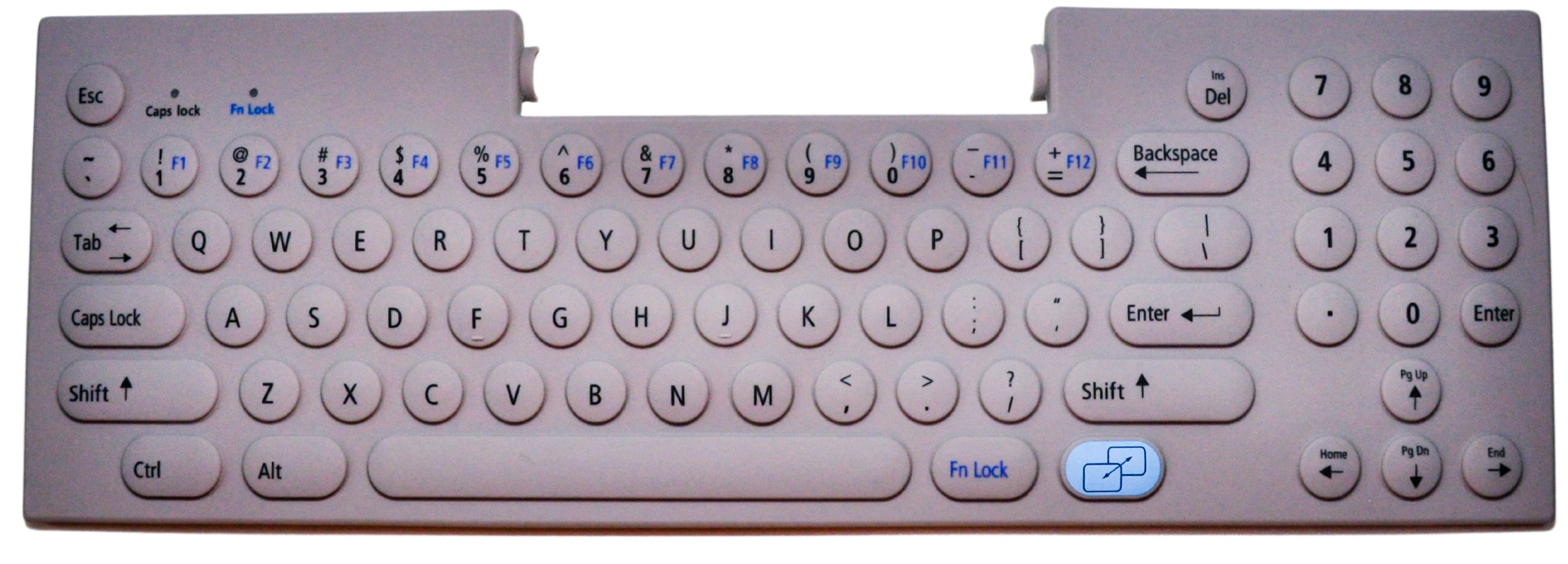
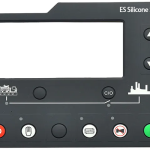
Previously, for this series of precision machining centers and CNC control panel keyboards, the characters were not directly molded onto the silicone keys. Instead, individual PC (polycarbonate) sheets printed with characters were attached to the silicone keys, and then a plastic keycap was placed over the top. This method made the keyboard assembly process very labor-intensive. A single control panel has at least hundreds of keys, which means that hundreds of PC sheets with printed characters had to be carefully positioned and affixed to the silicone keys. Any inattention could easily lead to misplacement or omission, resulting in the need for rework.
On a serendipitous occasion, the client learned that ES Silicone specializes in the development and production of high-end silicone keypads with stringent quality requirements. They flew to Shenzhen specifically to meet with our company. After conducting over 20 trials and testing more than 20 different process combinations with our R&D engineers, they ultimately selected 4 optimized process configurations. These will be applied to silicone keyboards required for precision engraving machines and CNC control panels.
One of the most commonly used combined processes is: Silicone molding in natural color + screen printing + laser engraving + PU coating. The base of the key is transparent, which meets the backlighting requirements. The surface is made into different colors such as gray, red, and blue according to different needs. Under sufficient light, the characters appear black, creating a high contrast with the key surface color, making them clearly visible. When the working environment is dimly lit, the backlight from the bottom of the keyboard shines through the translucent areas around the keys, projecting light onto the key surface, ensuring that the characters remain clearly visible even in low-light conditions.
Categories: Case
Latest Posts
- Crystal Buttons | Silicone + Plastic (P + R) Craftsmanship
- Silicone massage claws meet personalized customization needs
- Differences Between Prototype Molds and Production Molds
- The advantages of ES Silicone panel buttons applied in industrial machinery.
- Application of Silicone Buttons in Electrocardiography
发表回复