
In the protective design of Flexible Printed Circuits (FPCs), silicone encapsulation has become the industry-preferred method due to its exceptional flexibility, insulation properties, and environmental resistance. There are significant differences between "full" and "partial" silicone encapsulation in terms of protection levels, mechanical performance, cost, and suitable use cases. As a professional manufacturer specializing in silicone-encapsulated FPCs, Shenzhen ES Electronic Co., Ltd. provides an in-depth analysis of these two approaches—covering their technical implementation and typical applications—to help clients make more informed decisions during the design and selection process.
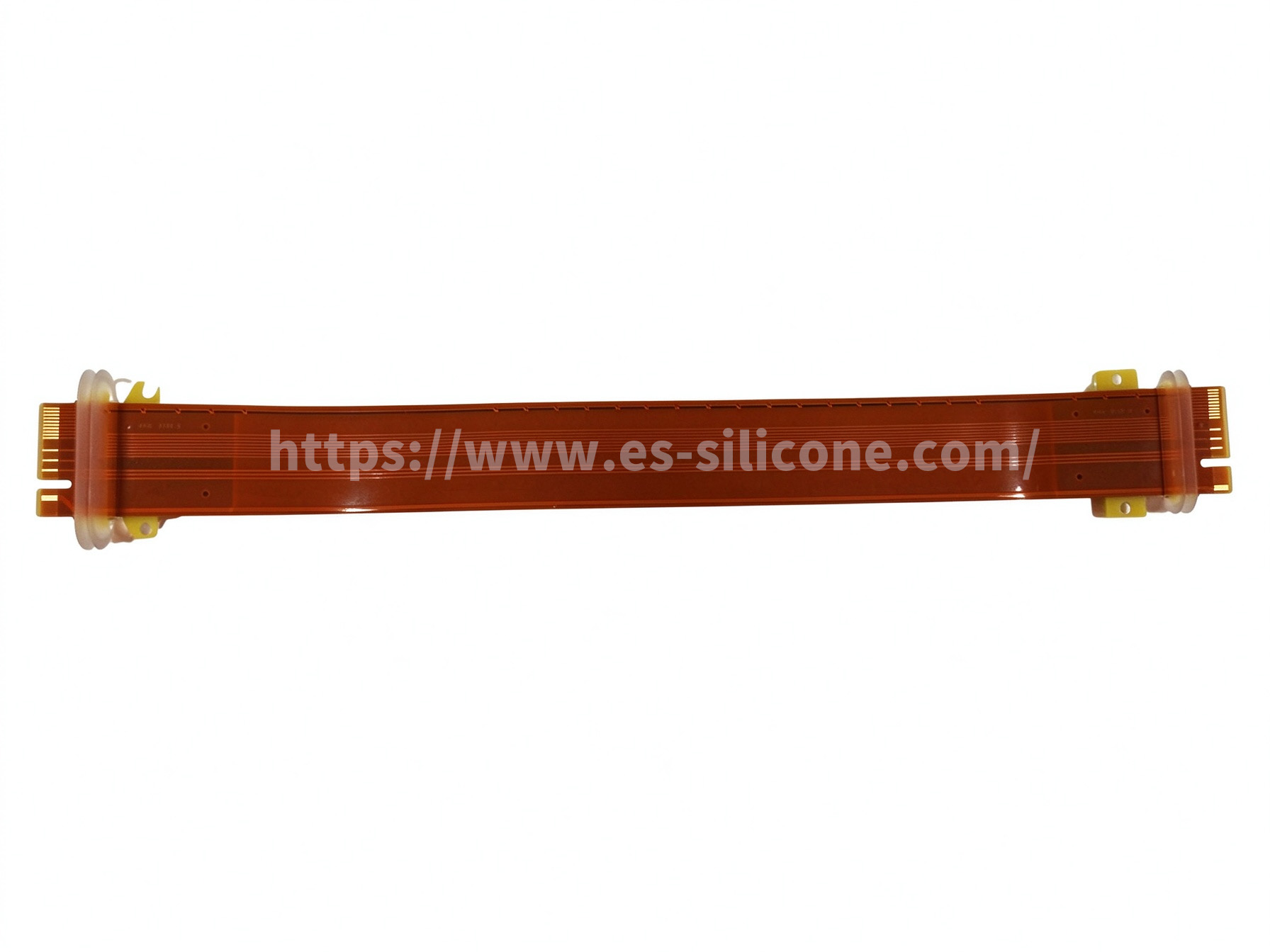
1. Full Silicone Encapsulation for FPCs
Process: Shenzhen ES Electronic Co., Ltd. utilizes Liquid Silicone Rubber (LSR) injection molding. The FPC is placed into a mold cavity, into which liquid silicone is injected and subsequently cured at high temperatures. The silicone bonds to the FPC’s coverlay through chemical bonding or physical anchoring, completely enclosing the conductive circuit layers, coverlay, and the base of the connectors within a seamless, 360-degree protective silicone shell.
Advantages: This full-encapsulation solution offers IP68-rated water and dust resistance. The cushioning properties of the silicone layer significantly enhance the FPC’s resistance to bending, stretching, and impact. Furthermore, the liquid silicone material is biocompatible—non-toxic and skin-friendly—ensuring safety for applications that involve direct human contact, such as wearable devices.
Applications: This solution is widely used in smart wearables, medical devices, automotive electronics, and outdoor waterproof equipment. Examples include internal flexible interconnects for smartwatches, fitness trackers, and TWS (True Wireless Stereo) earbuds; probes for medical monitoring equipment; cables for miniature sensors; and weather-resistant wiring for automotive lighting modules or rearview mirror folding mechanisms. It provides a highly reliable, long-lasting, one-stop solution for flexible interconnects in complex environments.
2. Partial Silicone Encapsulation for FPCs
Process: Shenzhen ES Electronic Co., Ltd. employs a selective, localized encapsulation process. Silicone encapsulation is applied only to the critical functional areas of the Flexible Printed Circuit (FPC)—such as bending zones, connector bases, and component solder pads.
Advantages: By encapsulating vulnerable points—including bending zones, connector bases, and solder pads—this approach effectively distributes bending stress, significantly extending the service life of the FPC during dynamic bending. It avoids the increased thickness associated with full-board encapsulation, ensuring that the original flexibility and bending radius of non-functional areas remain unaffected.
Applications: Shenzhen ES Electronic Co., Ltd. ’s partial silicone encapsulation solution for FPCs is utilized in various demanding environments. These include hinge-area flexible cables for consumer electronics like foldable smartphones and smartwatches; vibration-resistant applications such as automotive center consoles and lighting modules; and precision equipment—including industrial robot joints and medical ultrasound probes—that require high-frequency dynamic bending or exceptional reliability. Its core value lies in providing precise protection for the most fracture-prone areas (bending zones and solder joints) within confined spaces, effectively balancing the need for breakage prevention with a slim, lightweight profile.
The choice between full and partial silicone encapsulation for an FPC should be based on a comprehensive assessment of protection requirements, budget, and manufacturing feasibility; neither approach is inherently superior to the other. As a professional manufacturer specializing in custom silicone-encapsulated FPCs, Shenzhen ES Electronic Co., Ltd. evaluates your product’s end-use scenario, material properties, and mass-production viability to deliver a tailored solution that perfectly aligns with your specific needs.
 Keypads & Buttons
 Protective Covers
 LSR Overmolding
 Seals & Gaskets
 Conductive Zebra Strips
 Other Silicone Components
 Financial & Payment
 Consumer Electronics
 Industrial Control
 Beauty & Personal Care
 Medical & Healthcare
 Others