
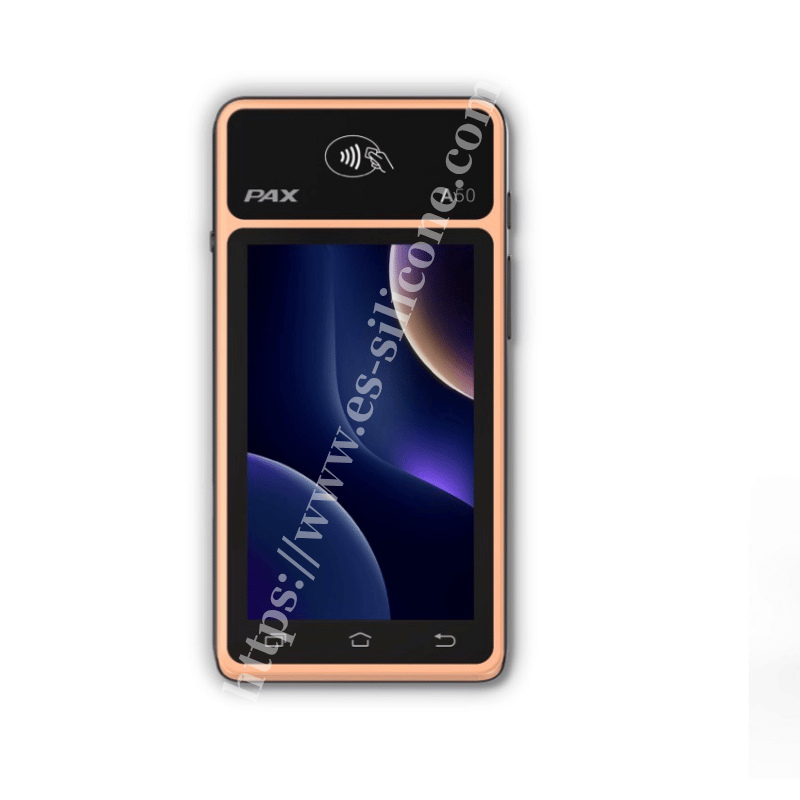
On a compact payment terminal, the distance between a button and the edge of the device is often only a few millimeters. That margin determines whether a protective case interferes with key presses. If the case wall is too thick around the perimeter, tactile response suffers and input errors increase. If it fits loosely, the case shifts during use and creates the same problem from a different direction.
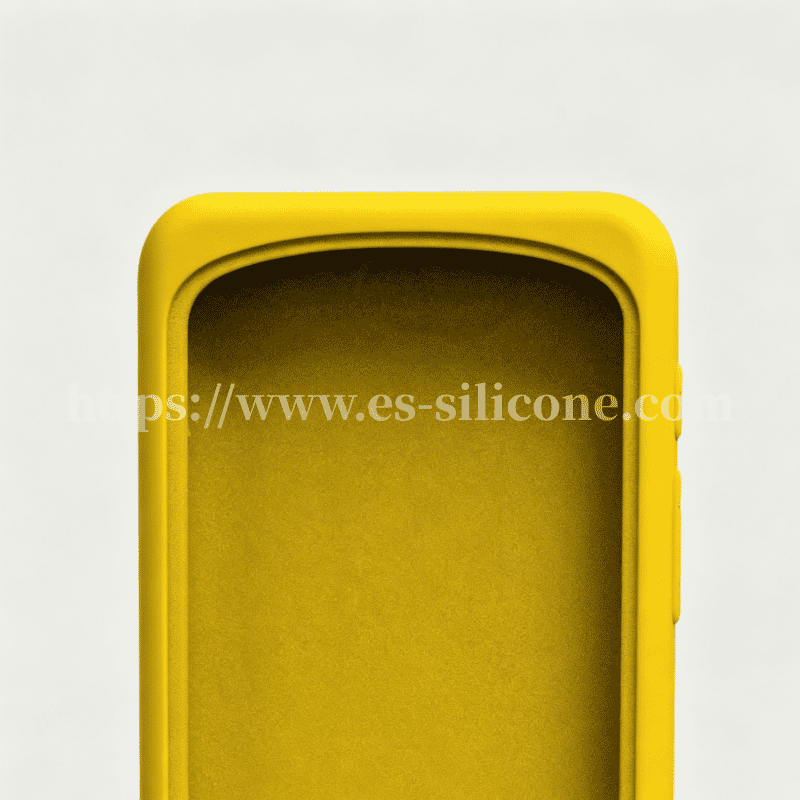
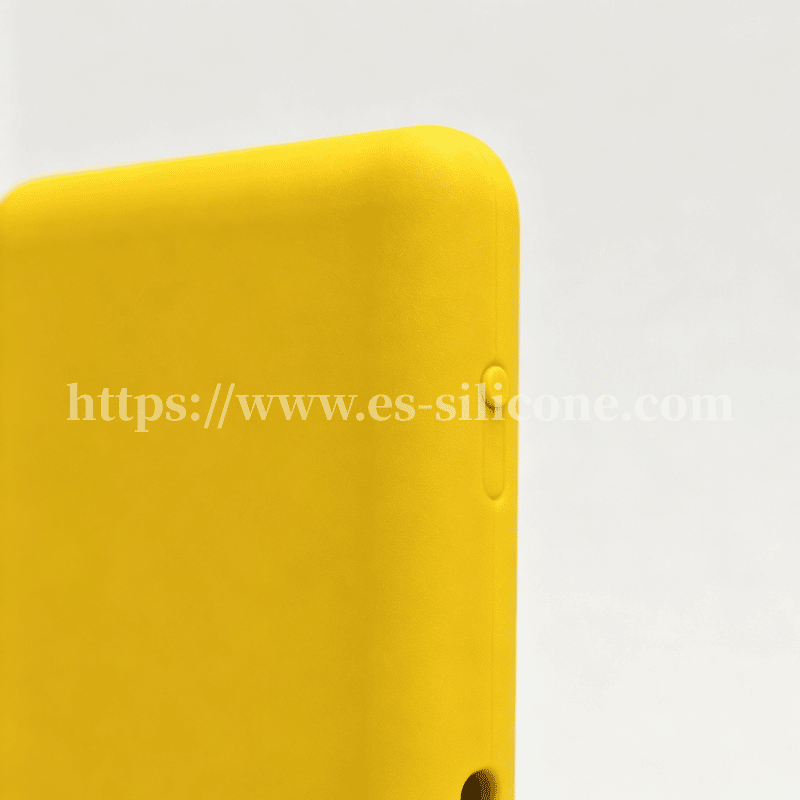
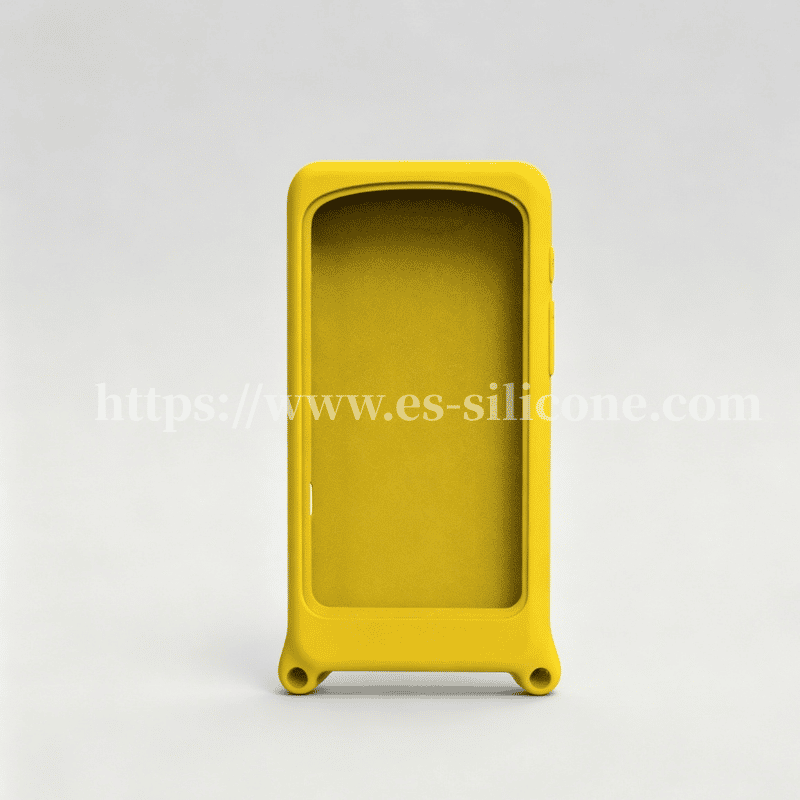
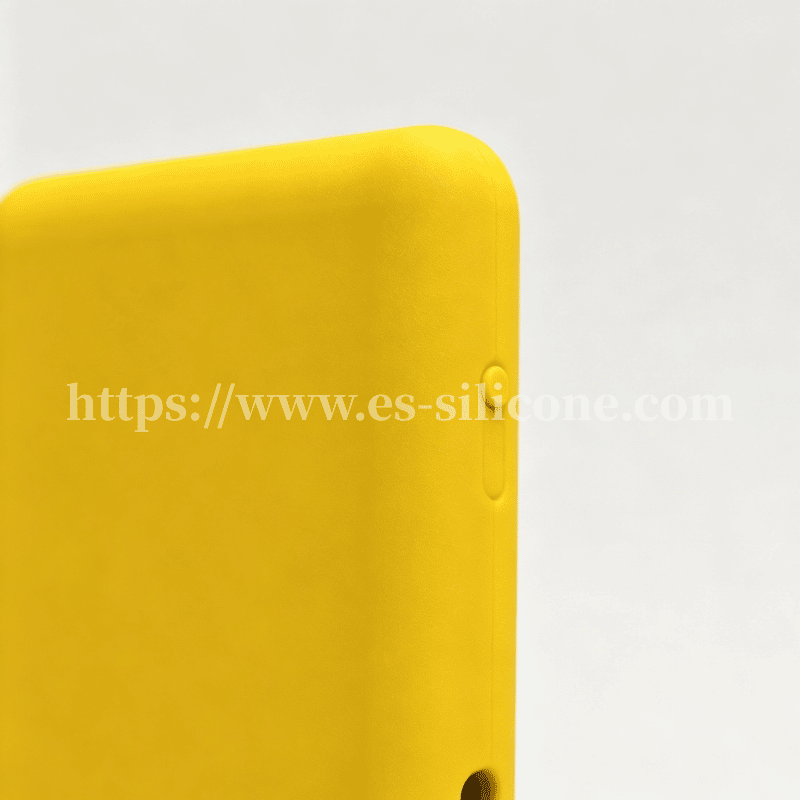
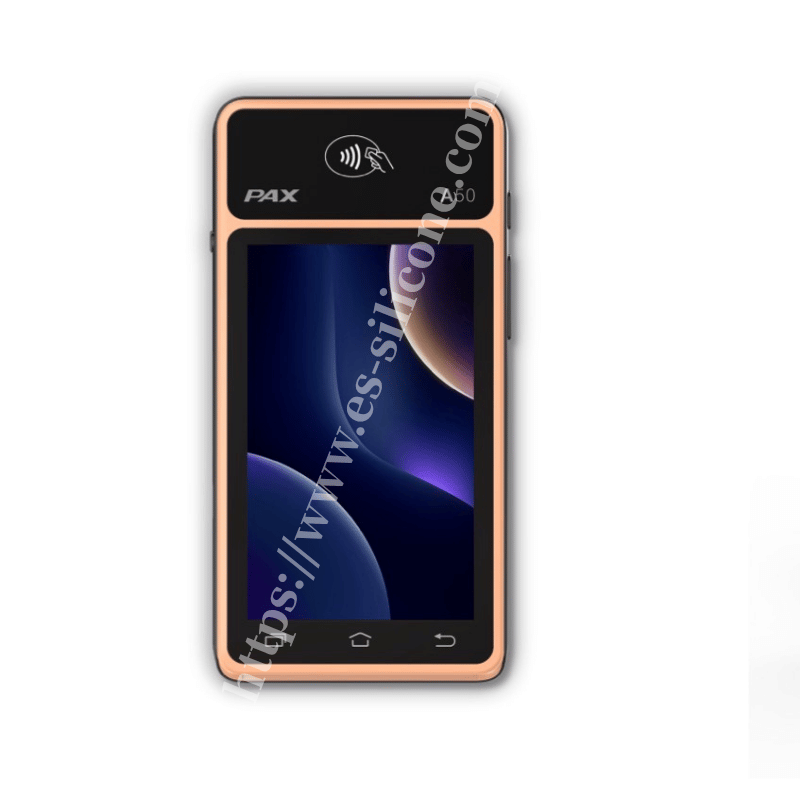
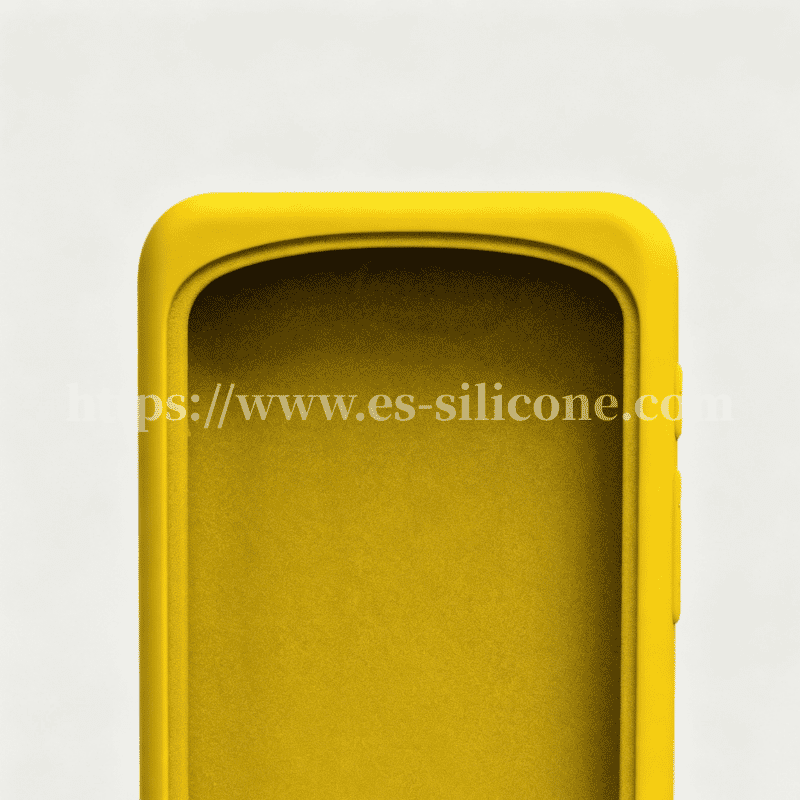
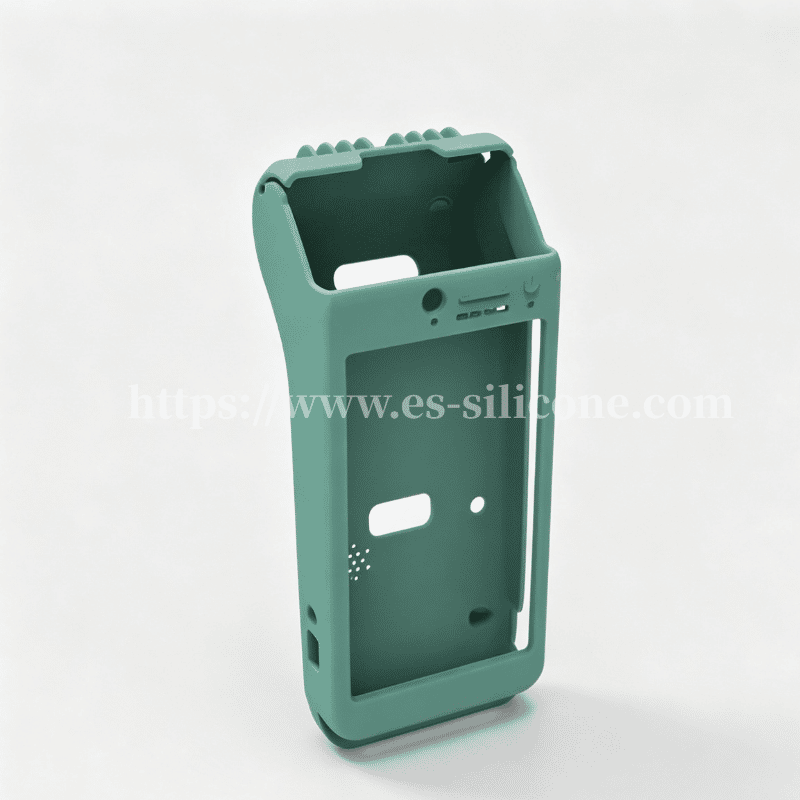
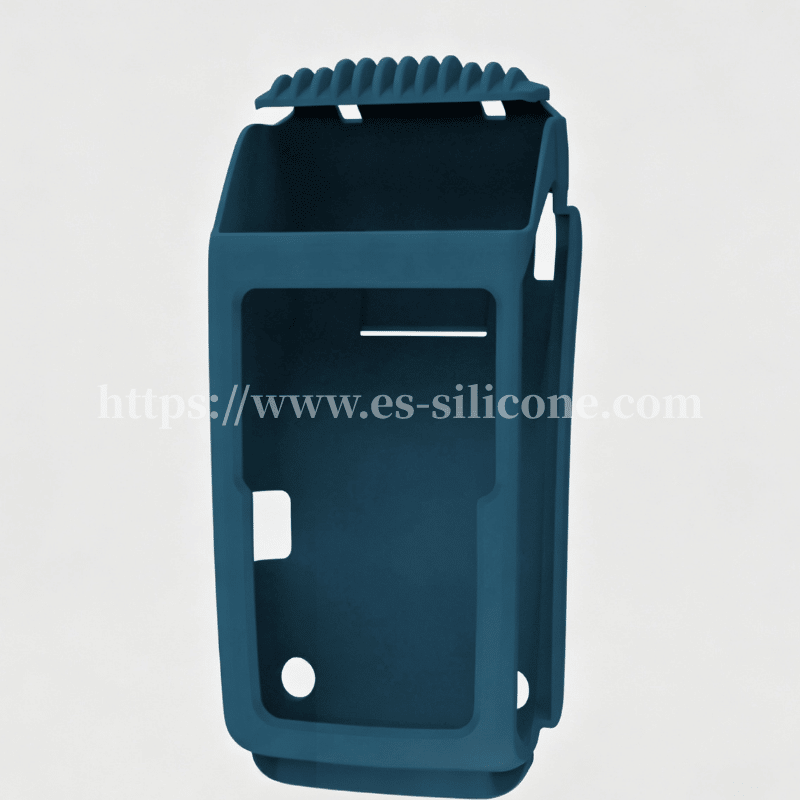
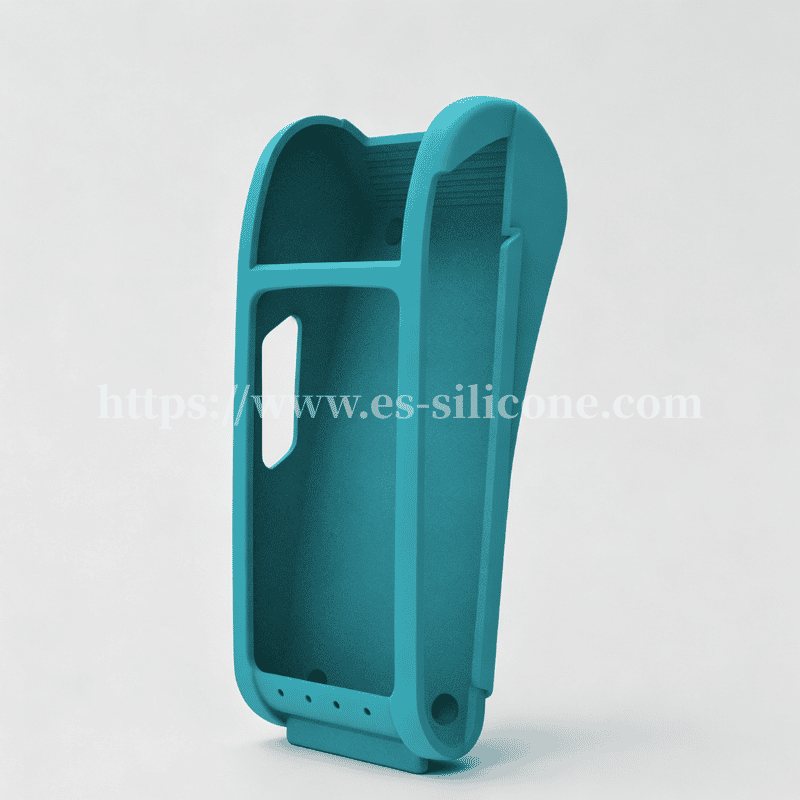
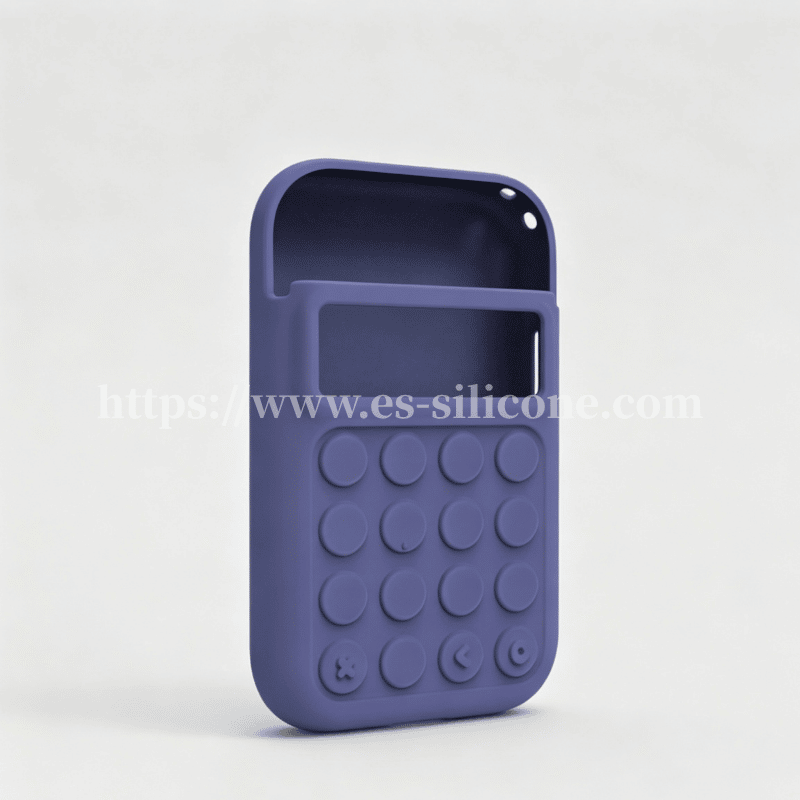
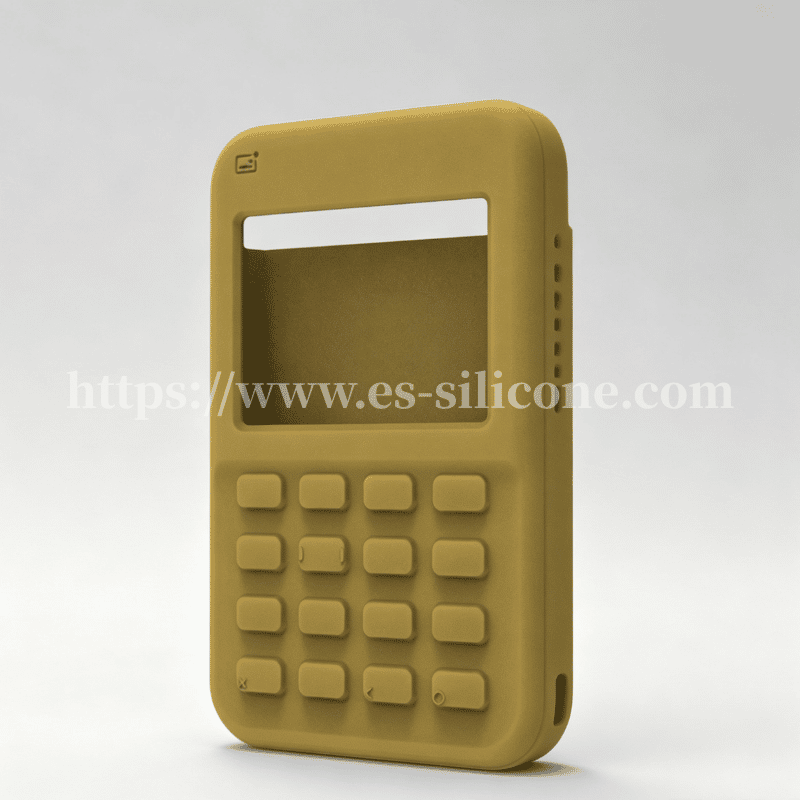
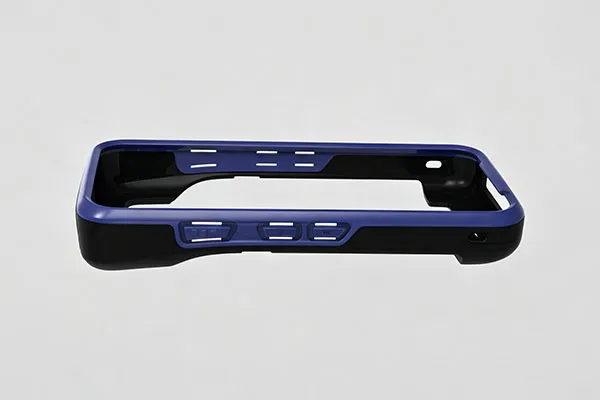
For the PAX-A50, we treated the button layout as a fixed constraint rather than a cutout added at the end of design. Before any mold was cut, we mapped the terminal's perimeter, button positions, and interface openings, then built mold geometry around those reference points. Wall thickness around the key area was controlled to maintain tactile response, while corner thickness was verified separately to absorb drop impact without adding bulk. The anti-slip texture was engraved directly into the mold cavity, and the silicone compound was tuned with UV stabilizers and anti-aging additives to resist yellowing and surface hardening under prolonged exposure. This is a brand-customer customization case, not a product for sample sale. Brands developing similar protective solutions can begin with a validation batch of 100 pieces, with all tooling, molding, and inspection completed in-house.
1. Button Area Treated as a Constraint, Not a Cutout : The A50's key positions are mapped before mold design and used as fixed reference points. Wall thickness around the button perimeter is controlled so the case does not interfere with tactile response or key travel.
2. Corner Thickness Tuned Separately from the Button Perimeter : Drop protection and button accessibility are handled as two separate design problems. Corner thickness is verified independently to absorb impact energy without adding bulk where it would affect usability.
3.Anti-Slip Texture Engraved Into the Mold Cavity : Grip patterns are cut directly into the mold rather than applied as a coating, keeping traction consistent on the case surface without peel or wear issues at high-contact points.
1.Industry Compatibility:
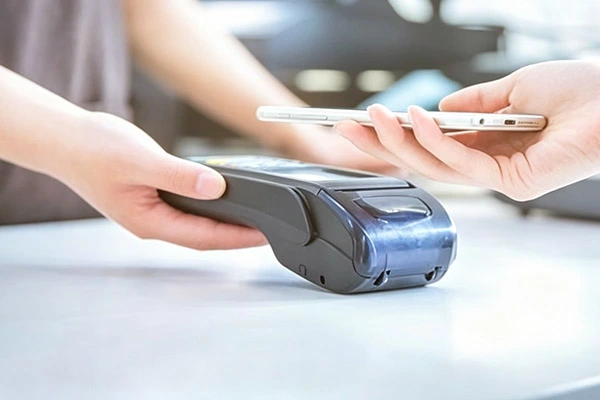
Retail & Payment : POS terminals in stores, supermarkets, hotels, and restaurants requiring device protection
Logistics & Delivery : Handheld POS devices used in field operations, delivery services, and mobile payment scenarios
Unattended & Self-Service : Kiosk terminals, self-checkout devices, and automated payment stations
2.Core Product Application Scenarios:
Retail Store POS Terminals for Daily Handling : Anti-slip silicone case protects devices from drops and impacts during busy checkout operations, with moderate grip reducing handling fatigue for cashiers
Mobile POS Devices for Delivery and Field Use : Durable protective case shields terminals from bumps, scratches, and environmental exposure during outdoor operations
Multi-Location Deployments with Cable Connections : Unobstructed cable port access allows the case to remain in place during maintenance or peripheral changes
1.Fully Customized Products: All ES Silicone products are custom-made based on customer requirements.
2.MOQ Requirements: MOQ varies by product category, structure, and production requirements. Typically, orders start from 100 pieces.
3.Prototype & Mass Production: We support prototype validation before mass production. Reasonable prototype fees apply and may be credited for qualified projects.
4.Engineering Support: Our engineering team provides DFM evaluation to optimize product feasibility and ensure stable production.
5.More Project Cases: Website examples represent selected non-confidential projects. Contact us for more customized applications and solutions.
6.Learn More About ES Silicone: Discover our capabilities and workflow through Who We Are and How We Work.


 Keypads & Buttons
 Protective Covers
 LSR Overmolding
 Seals & Gaskets
 Conductive Zebra Strips
 Other Silicone Components
 Financial & Payment
 Consumer Electronics
 Industrial Control
 Beauty & Personal Care
 Medical & Healthcare
 Others