
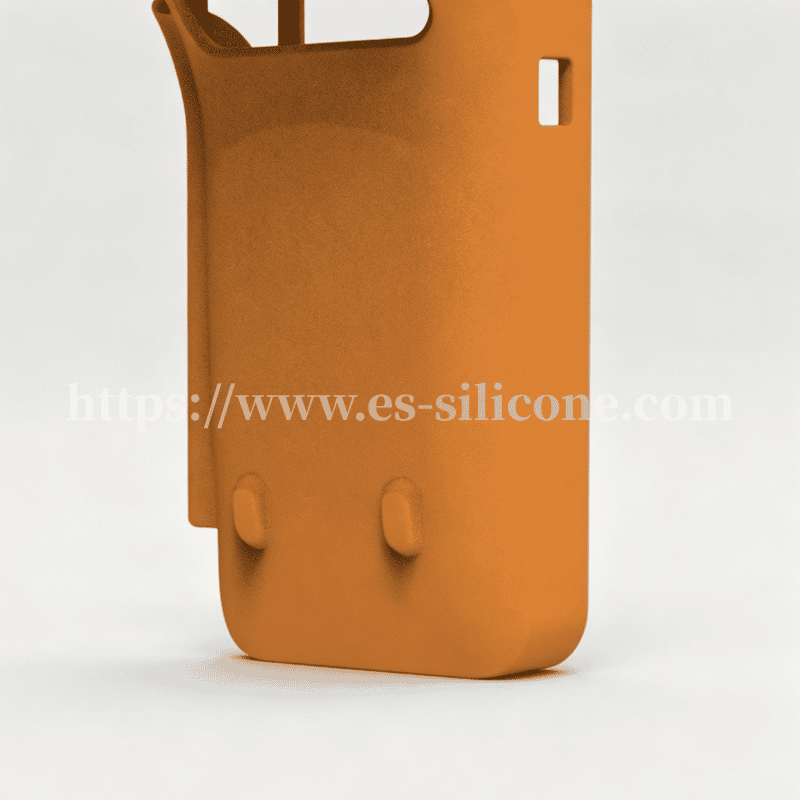
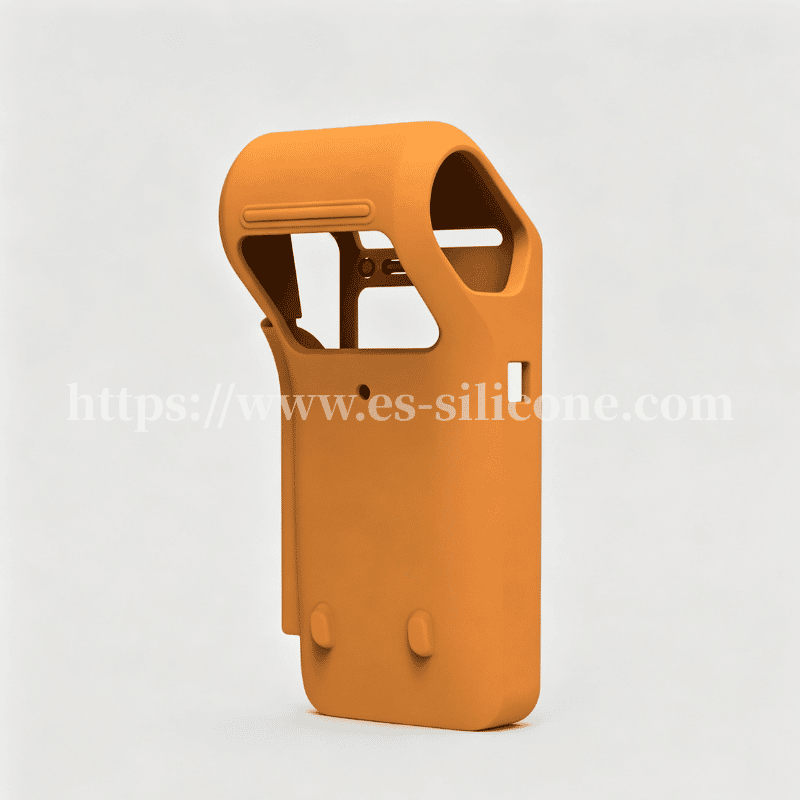
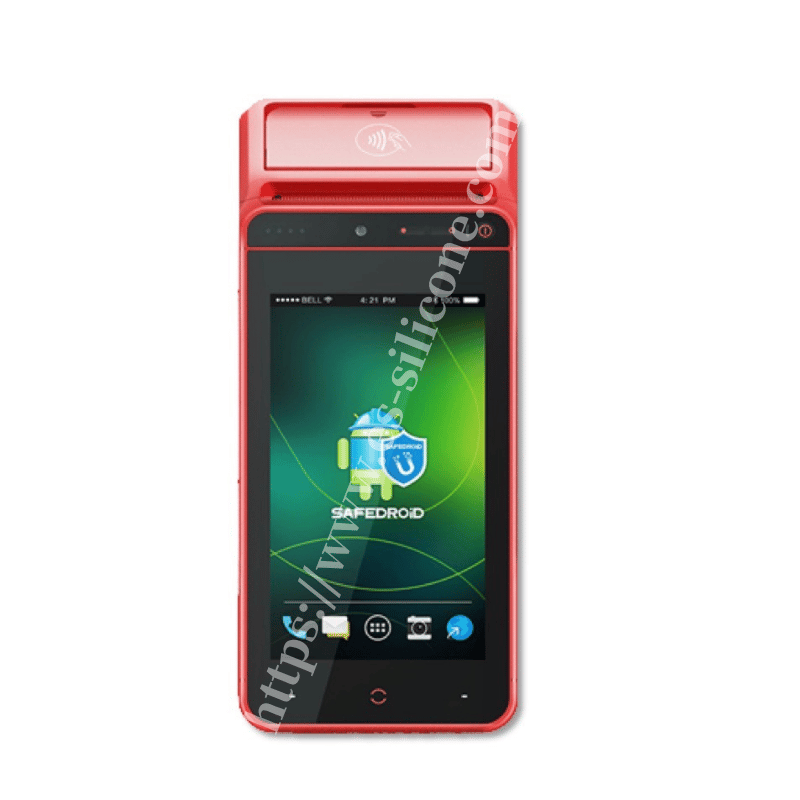
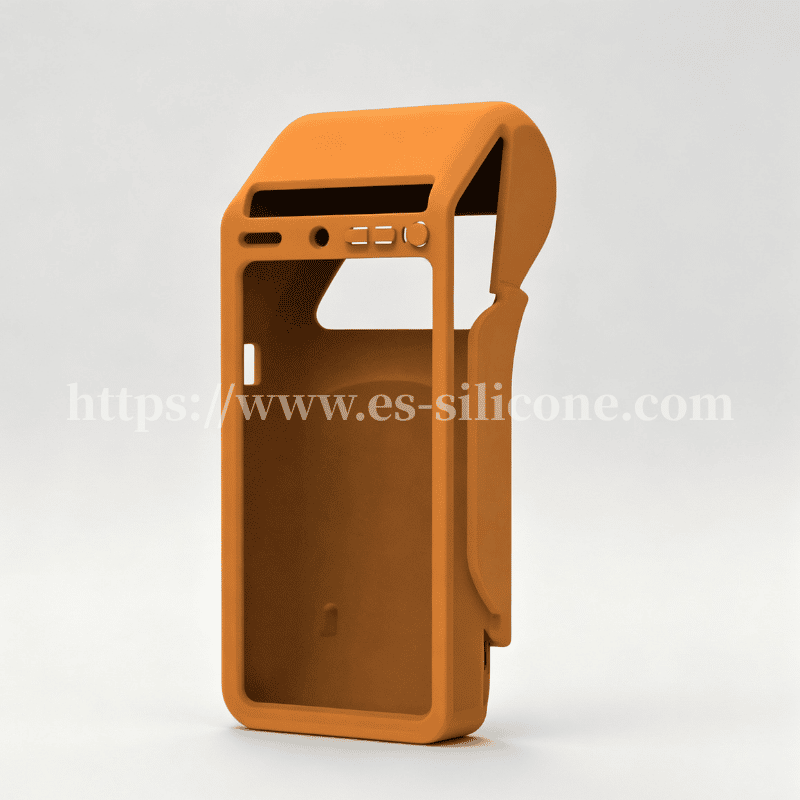
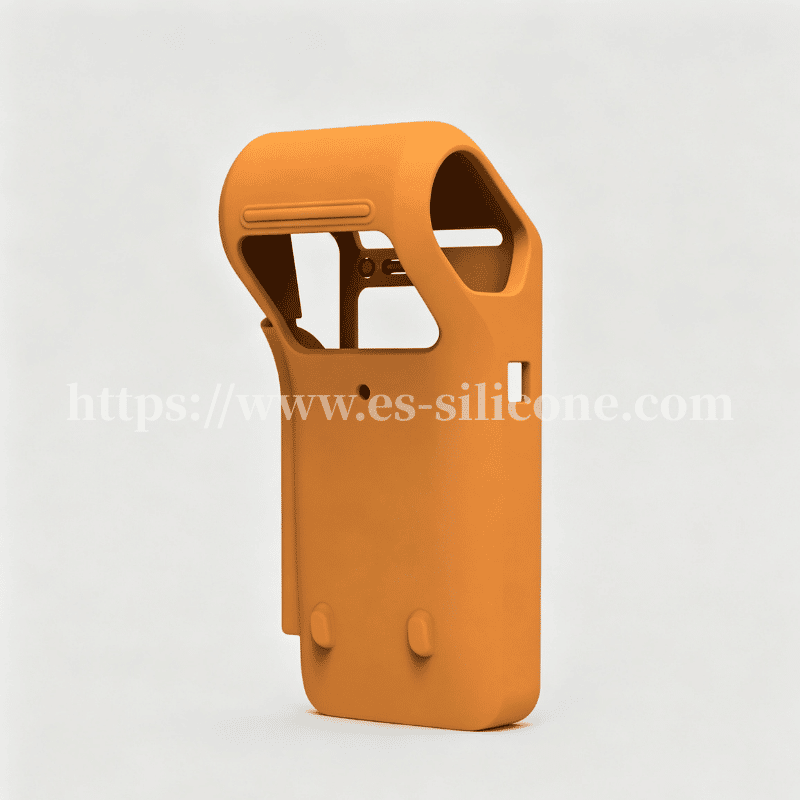
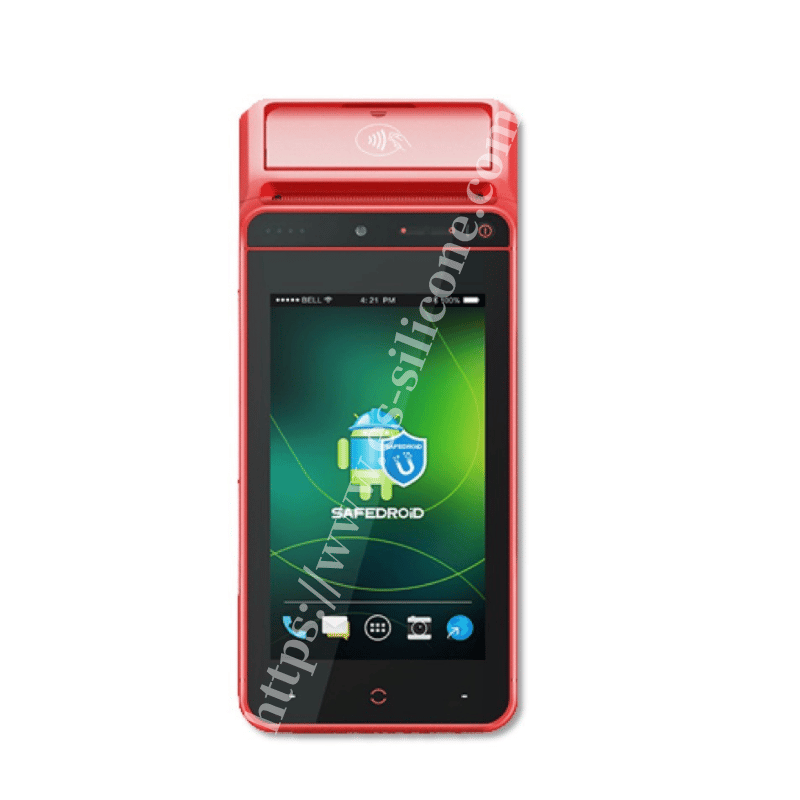
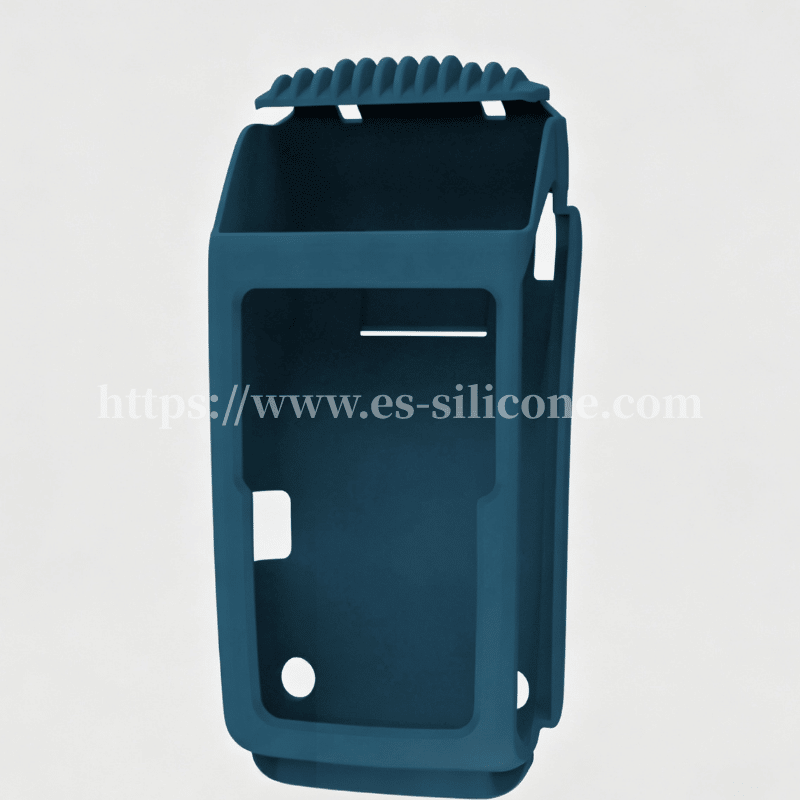
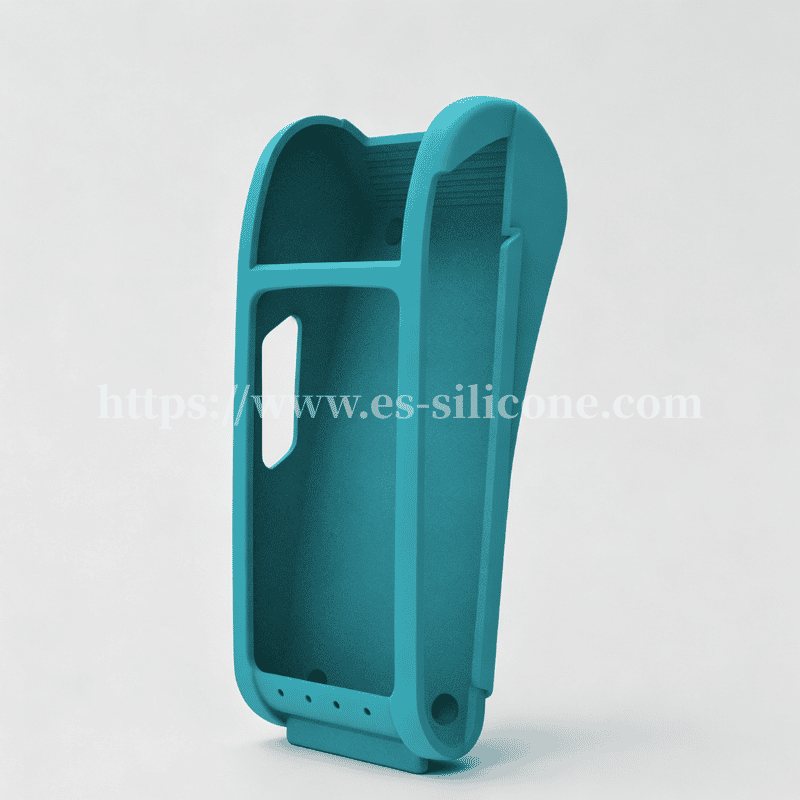
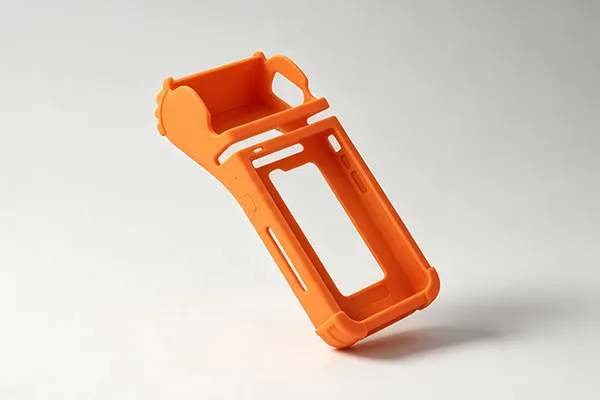
A protective case for a handheld terminal is touched more often than it is looked at. That changes the design priorities. For the UROVO-SQ29, the starting question was not how to cover the device, but how the case would feel after an hour of continuous use. The SQ29's body is rounded and compact, which means a case that adds hard edges or uneven thickness will create pressure points instead of protection.
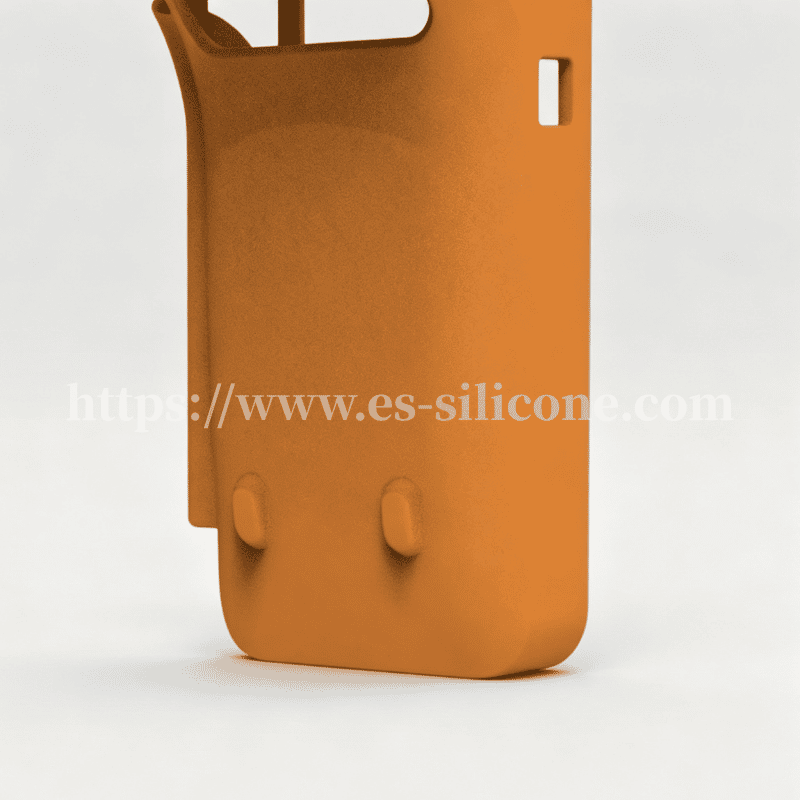
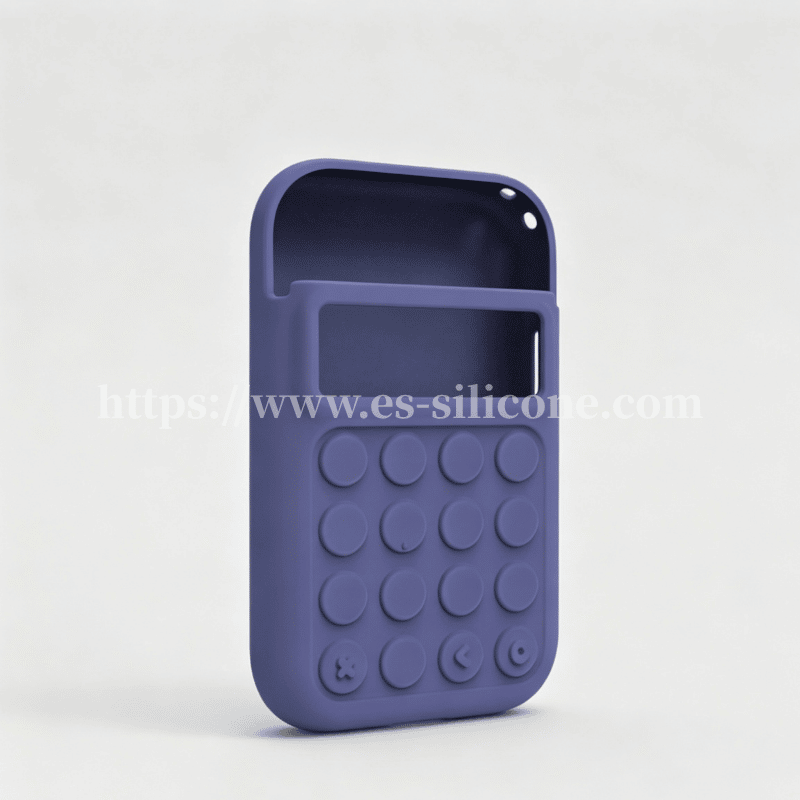
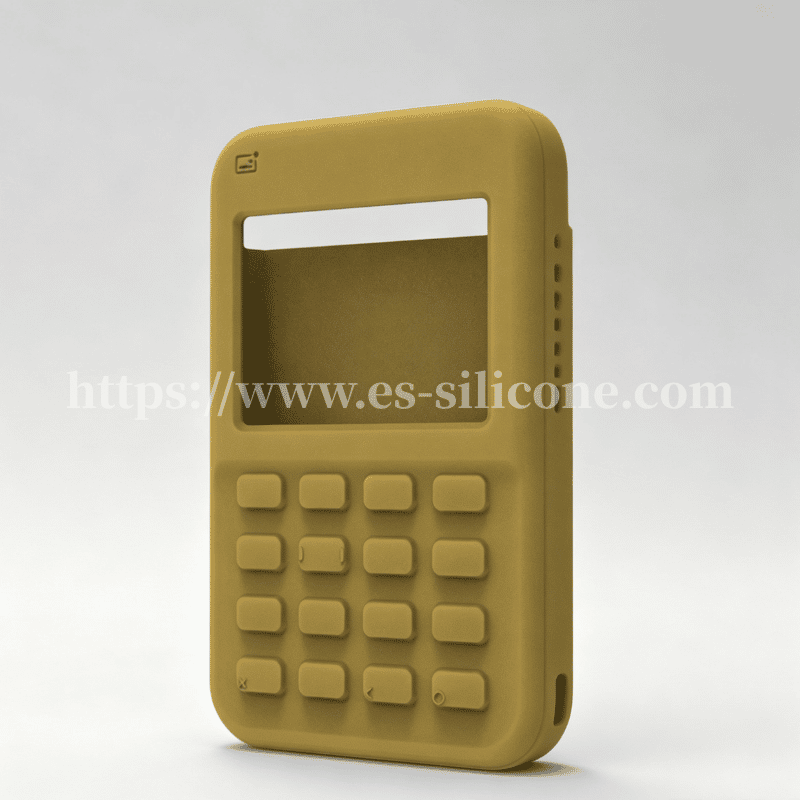
We approached the project by mapping the terminal's curved surfaces and identifying where the palm and fingers naturally rest. Mold geometry was then built around that map, with wall thickness balanced across the rounded profile so the case stays slim without becoming thin at the corners. The parting line was moved outside the primary grip zone, so it does not create a ridge where the hand contacts the surface. The anti-slip texture was engraved directly into the mold cavity, ensuring consistent traction where it matters most rather than across the entire surface uniformly. The silicone compound was adjusted with UV stabilizers and anti-aging additives to resist yellowing and hardening under prolonged light exposure. This is a brand-customer customization case, not a product for sample sale. Brands developing similar protective solutions can begin with a validation batch of 100 pieces, with all tooling, molding, and inspection completed in-house.
1. Grip-First Mold Design Rather Than Coverage-First : We identify the hand's natural contact points on the terminal before designing the mold, then shape the case geometry around those areas. The result is a protective sleeve that improves handling instead of just covering the body.
2. Parting Line Positioned Away From the Palm Contact Zone : Where the mold splits affects how the case feels in the hand. We move the parting line outside the primary grip area, so it does not create a ridge or distraction during extended one-handed use./span>
3.Wall Thickness Balanced for Slimness and Corner Protection : Curved bodies tend to produce uneven wall thickness if mold geometry is not adjusted. We verify thickness across the rounded profile to maintain a slim feel while keeping the corners thick enough to absorb impact.
1.Industry Compatibility:
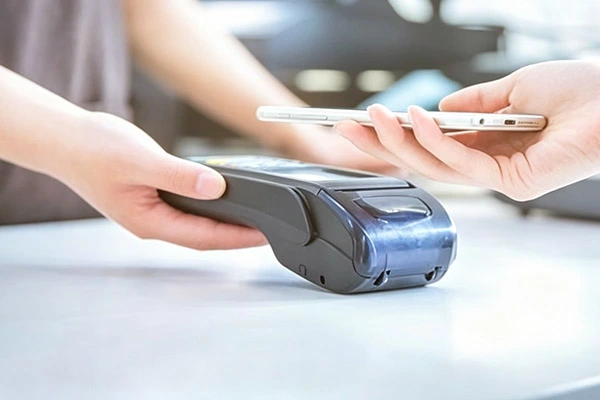
Retail & Payment : POS terminals in stores, supermarkets, hotels, and restaurants requiring device protection
Logistics & Delivery : Handheld POS devices used in field operations, delivery services, and mobile payment scenarios
Unattended & Self-Service : Kiosk terminals, self-checkout devices, and automated payment stations
2.Core Product Application Scenarios:
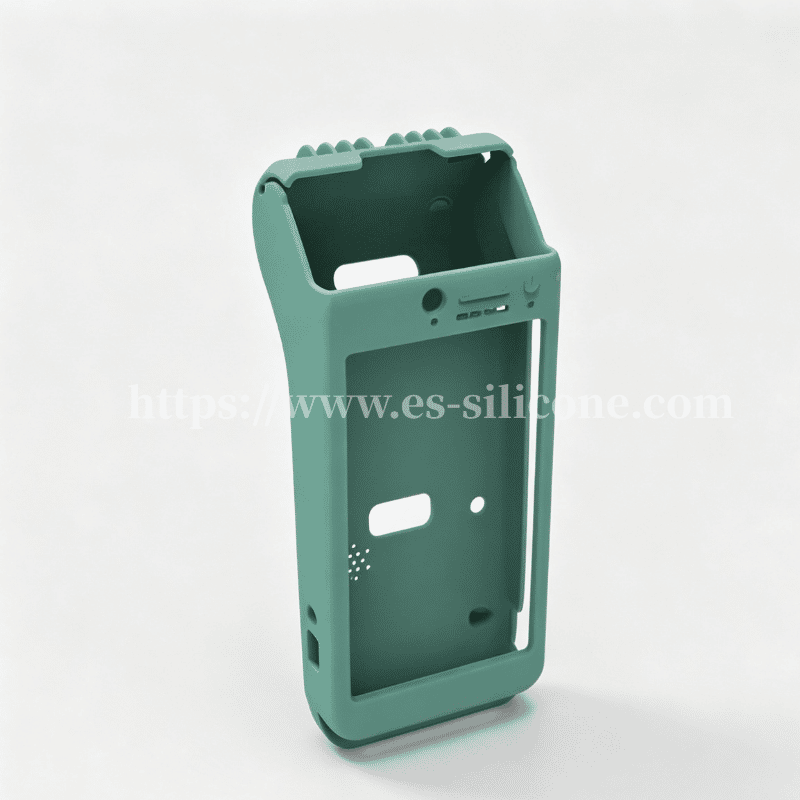
Retail Counter Terminals with Angled Displays : Mold design follows the terminal's non-symmetrical profile, keeping the case fitted without gaps or thin sections at transition points
Mobile POS Devices for Delivery and Field Use : Durable protective case shields terminals from bumps, scratches, and environmental exposure during outdoor operations
Hospitality Check-In Devices for Guest-Facing Areas : Low-visibility parting line placement and consistent surface finish maintain a professional appearance in customer-facing environments
1.Fully Customized Products: All ES Silicone products are custom-made based on customer requirements.
2.MOQ Requirements: MOQ varies by product category, structure, and production requirements. Typically, orders start from 100 pieces.
3.Prototype & Mass Production: We support prototype validation before mass production. Reasonable prototype fees apply and may be credited for qualified projects.
4.Engineering Support: Our engineering team provides DFM evaluation to optimize product feasibility and ensure stable production.
5.More Project Cases: Website examples represent selected non-confidential projects. Contact us for more customized applications and solutions.
6.Learn More About ES Silicone: Discover our capabilities and workflow through Who We Are and How We Work.


 Keypads & Buttons
 Protective Covers
 LSR Overmolding
 Seals & Gaskets
 Conductive Zebra Strips
 Other Silicone Components
 Financial & Payment
 Consumer Electronics
 Industrial Control
 Beauty & Personal Care
 Medical & Healthcare
 Others